
Power bite
A jaguar’s jaws can crush a turtle shell — unusual among big cats, which usually bite the neck.
The Sanctuary · Big cats
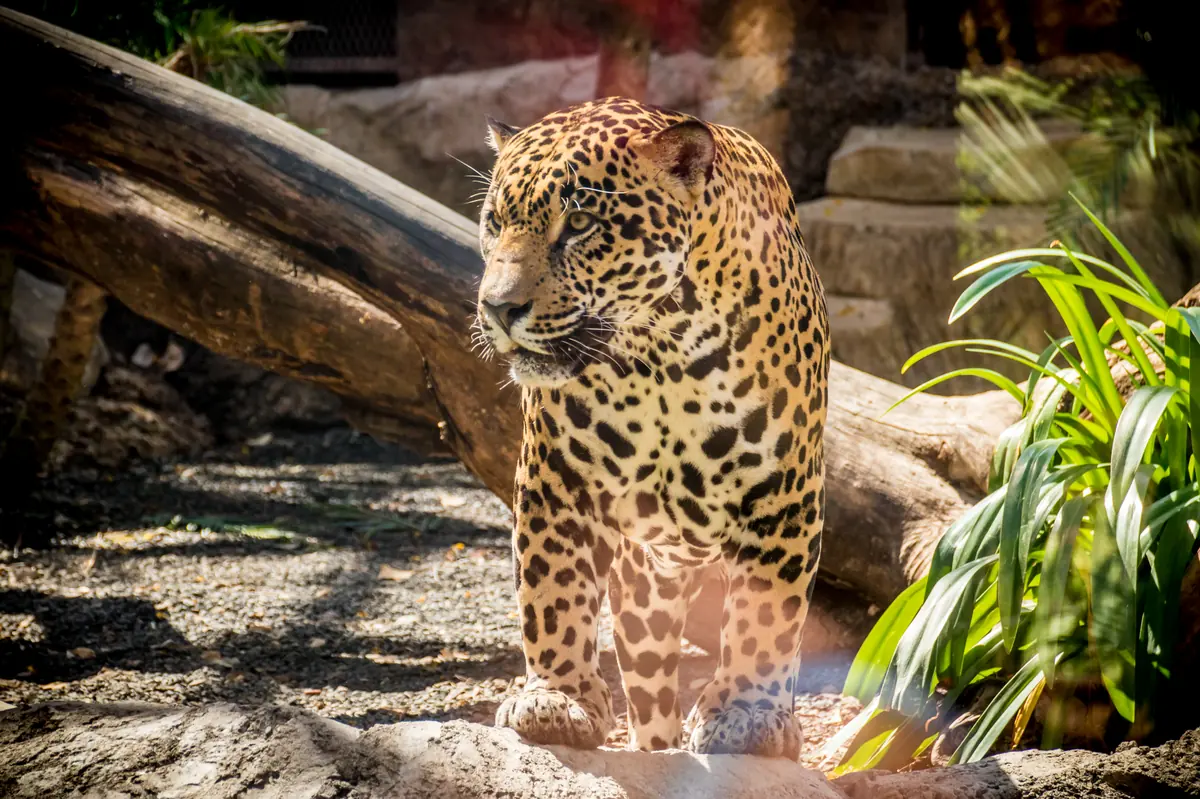
The largest cat in the Americas: golden coat, black rosettes and the most powerful bite of any feline in the forest.
In the wild
The jaguar is the largest cat in the Americas and the third-largest in the world, after the tiger and the lion. Its scientific name is Panthera onca, and it roams from Mexico to Argentina.
In Costa Rica jaguars are symbols of power and guardians of the rainforest. They survive in protected areas, but the species is near-threatened: keeping forest connected is what keeps jaguars in the wild.
Fun facts
Biologists at Diamante share these facts with guests on every walk through the sanctuary.
A jaguar’s jaws can crush a turtle shell — unusual among big cats, which usually bite the neck.
A reflective layer behind the retina lets jaguars see clearly in near darkness.
Each rosette pattern is unique, like a fingerprint, and breaks up their outline in forest shadow.
Some jaguars are completely black. In sunlight you can still see their spots.
Third-largest big cat in the world, and the biggest in the Americas.
Jaguars stalk in silence and pounce in one jump. A territory can run from 25 to 100 km².
Jaguars usually breed once a year, with two to four cubs at a time.
Short, sharp and powerful — one of the most unmistakable sounds in the wild.
Meet ours
Our jaguars were confiscated in Ciudad Quesada when they were about three months old, after being kept illegally as pets. They arrived underweight, dehydrated and with skin problems.
They were placed with Diamante under SINAC supervision and now live in one of the sanctuary’s largest habitats, with shade, water and room to move. They are ambassadors for a species that needs connected forest to survive.
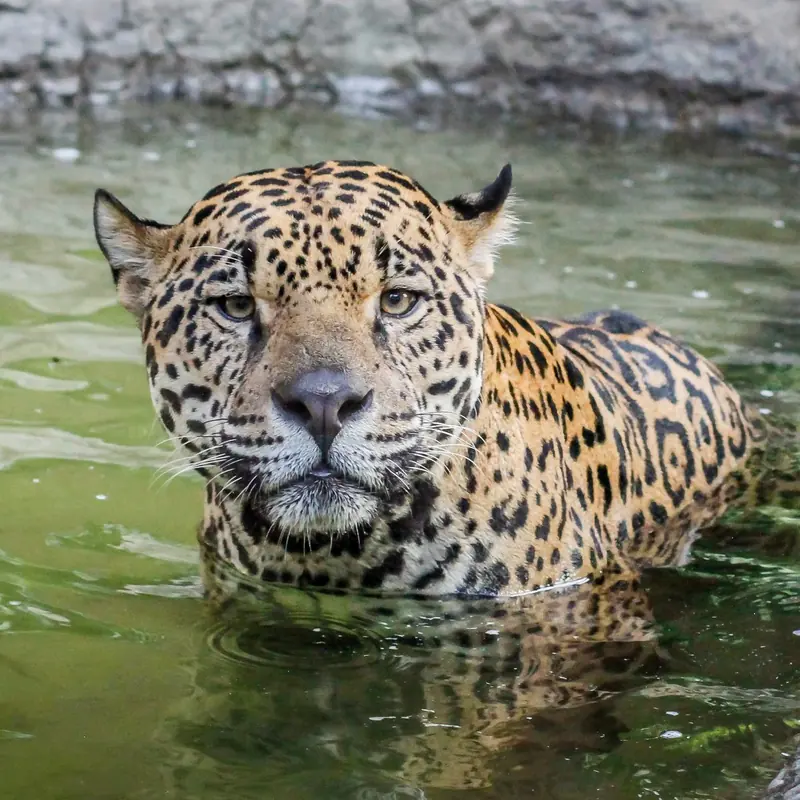
They were taken from the wild as cubs and raised by people, which makes a return to the forest impossible. SINAC placed them in the sanctuary permanently.
The habitat is large and the cats choose where to be. Guides know their habits and will point out the best vantage points, but the animals always set the distance.