
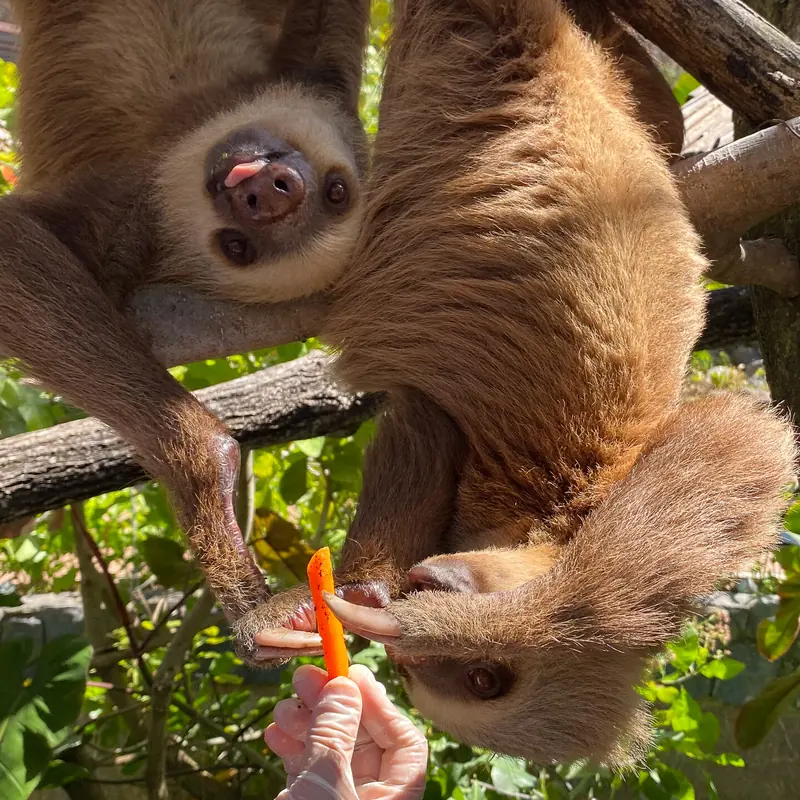
Two-toed sloths
Algae in their fur, 12-hour naps and a 30-day digestion. Meet Mia, Diesel, Ziggy and Lucy.
The Wildlife Sanctuary
More than a dozen rescued species live at Diamante — animals that cannot return to the wild, cared for by biologists and placed here with SINAC.
Why they live here
Costa Rica’s wildlife authority, SINAC, places confiscated and injured animals with facilities that can care for them for life. Diamante’s sanctuary is one of them. Some animals were smuggled; some were kept illegally as pets; some were injured in ways that make survival in the forest impossible.
More than a dozen biologists, including resident veterinarians, look after them. Several species here are part of national and international breeding programmes. Animals are not pets — they are ambassadors for the species still living wild in Costa Rica’s forests.
Self-guided, with biologists on site. Allow one to two hours.
Discovery Pass from $45 per person, or included with the Adventure Pass and the Cultural Experience.
Species guides
Each guide covers the animal in the wild, the facts biologists share with guests, and the rescue story behind the animals living at Diamante.
Algae in their fur, 12-hour naps and a 30-day digestion. Meet Mia, Diesel, Ziggy and Lucy.
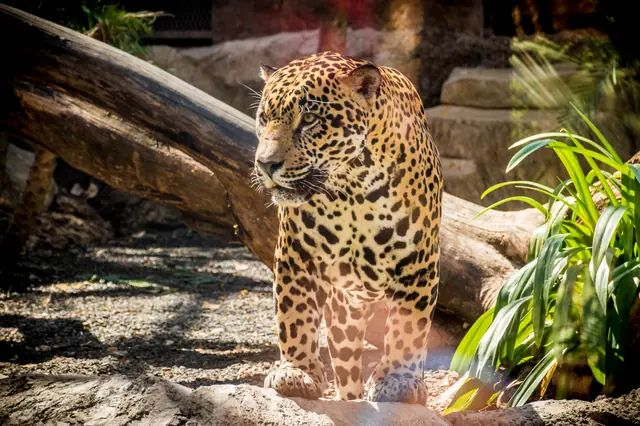
The largest cat in the Americas, and two cubs confiscated in Ciudad Quesada.
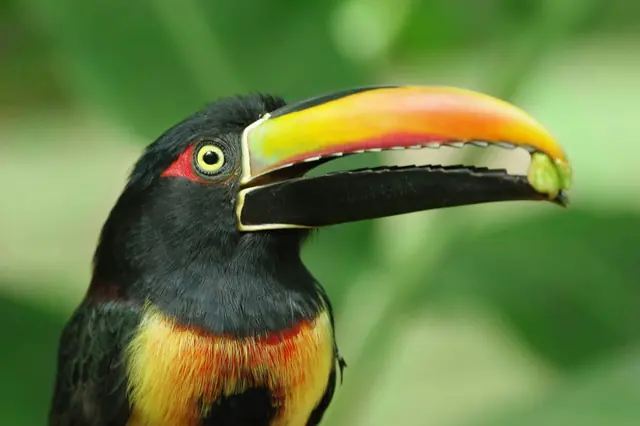
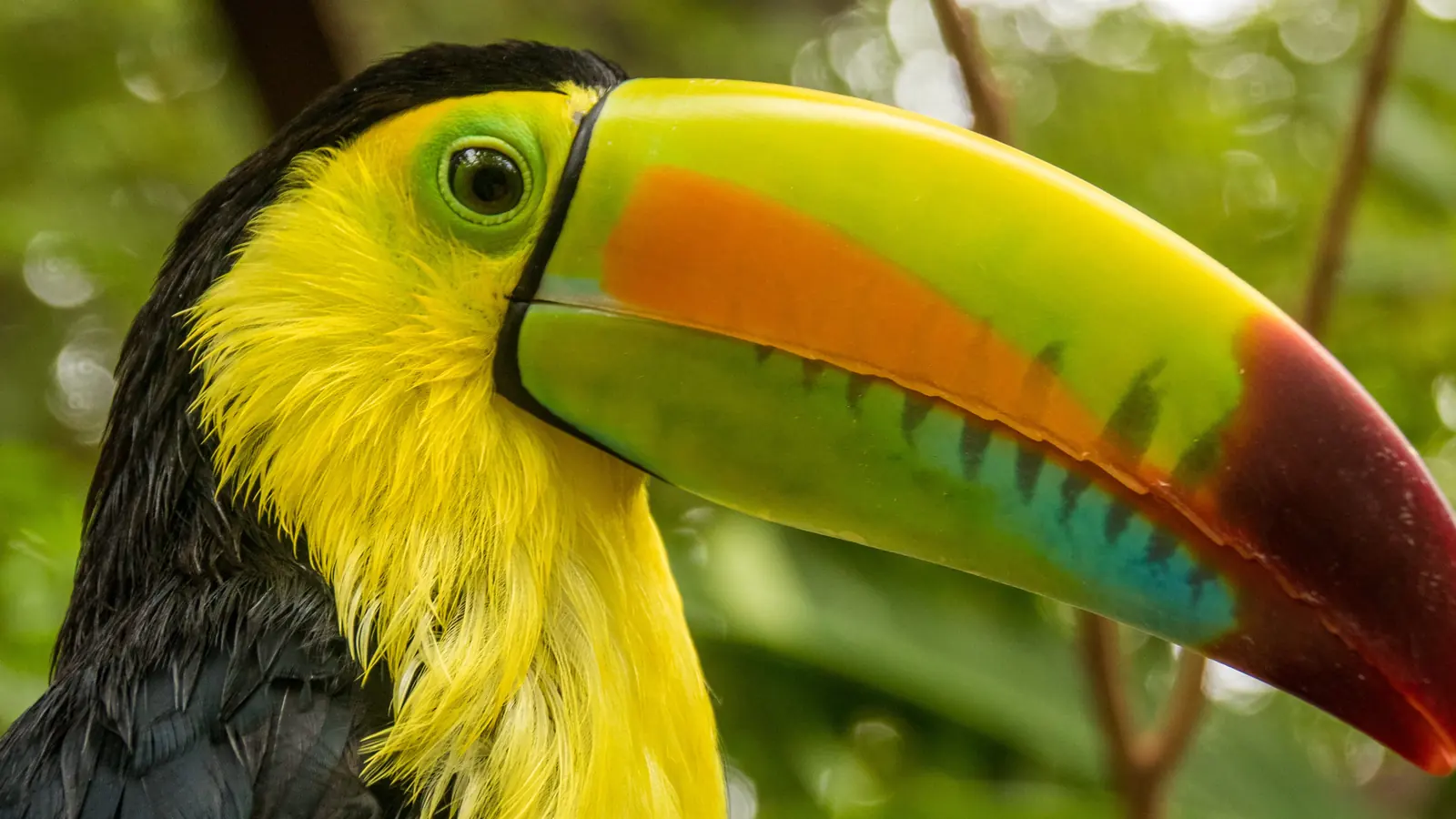
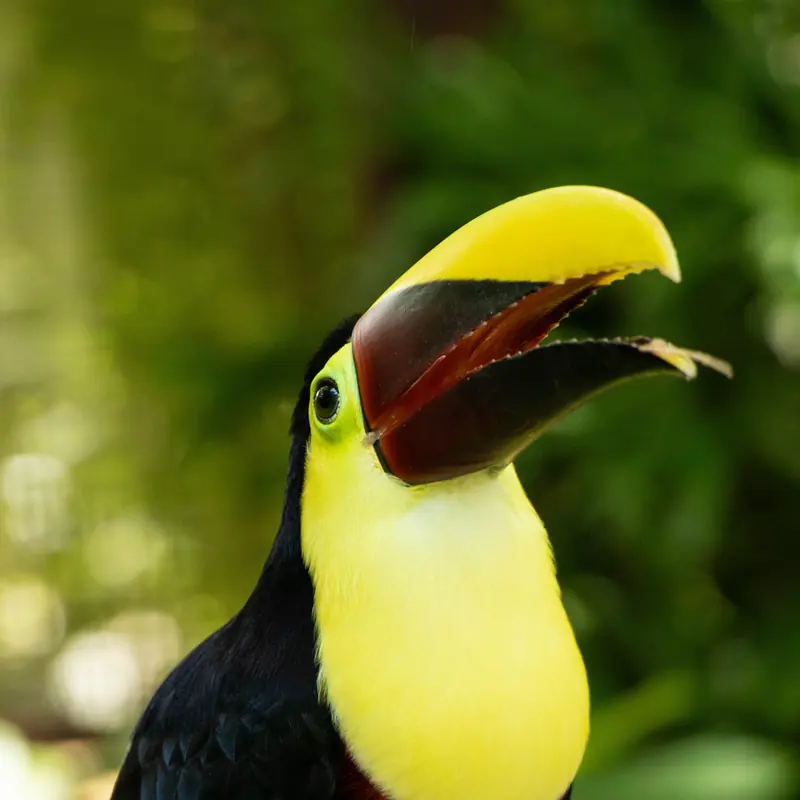
Three species, beaks made of keratin and air, and a call that is closer to a croak.
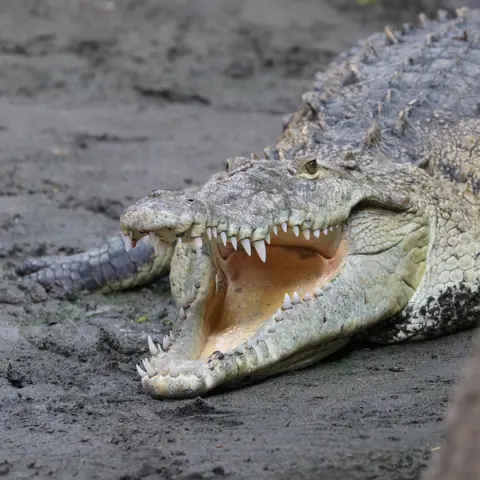
200 million years of design, 3,000 teeth, and Diego at 3.7 metres.
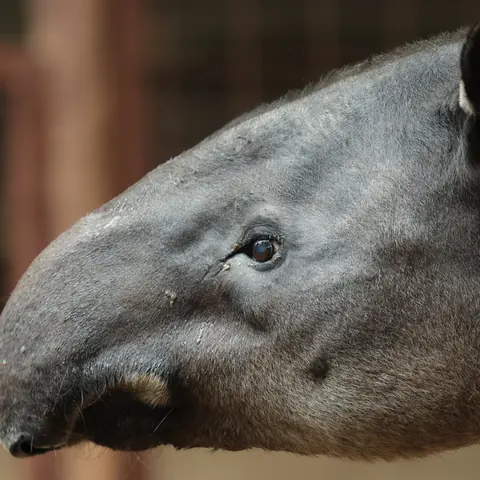
250 kg gentle giants with a snorkel for a nose and babies like watermelons.
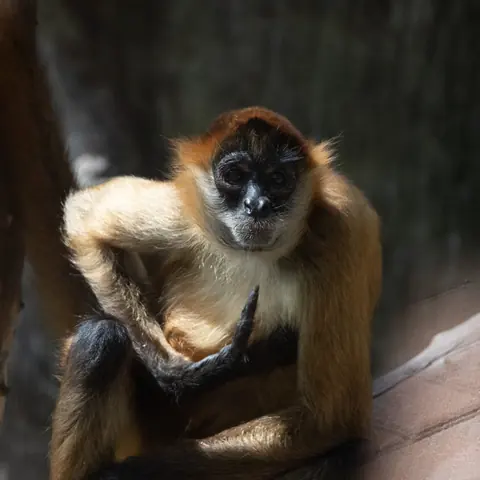
No thumbs, a fifth hand for a tail, and leaps of nine metres.
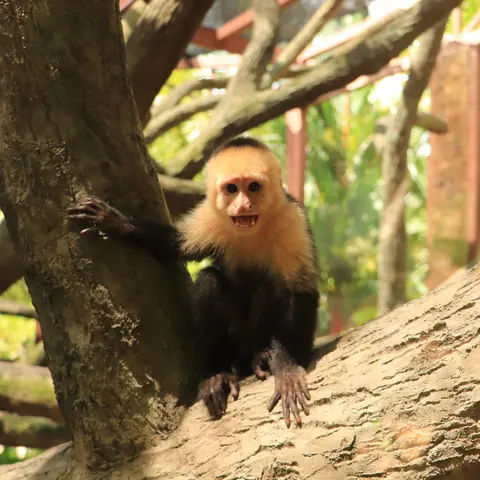
Tool users with 30 calls, and Balú’s rescued troop.
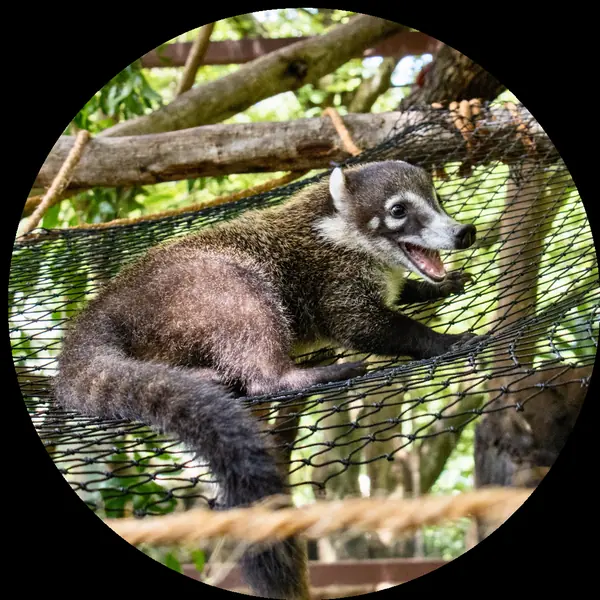
Bands of up to 30, tails that signal the group to move.
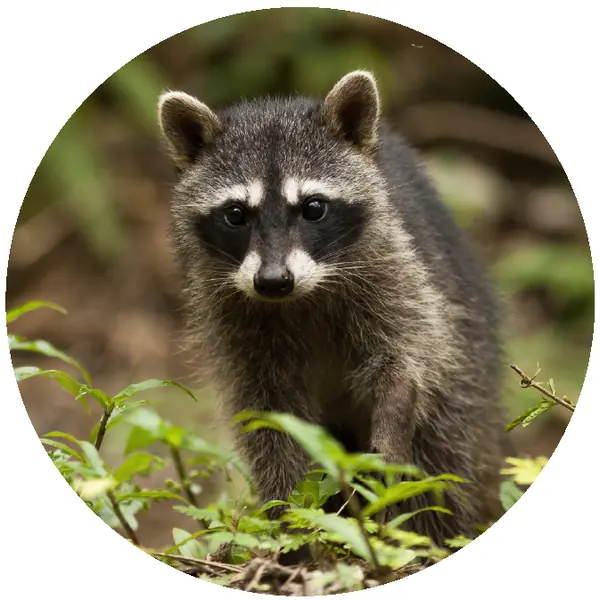
Masked night explorers with hands clever enough to open jars.
Also in the sanctuary
The species above have their own guides. These residents are just as worth stopping for — the guides will show you where to look.
Costa Rica’s second-largest cat, secretive and mostly nocturnal. Ours came from a rescue centre where they had been kept illegally.
A small spotted wild cat built for trees, with ankles that rotate to climb down head-first.
Grazers of the tropical dry forest, with the white underside to the tail that gives them their name.
Snakes, frogs and lizards native to Guanacaste, including the bright green emerald basilisk.
A walk-through habitat for native butterflies, including the blue morpho.
Loud, unmistakable and among the most photographed birds on the property.
Herons and egrets around the ponds, part of the park’s wetland edge.
Howler monkeys, coatis and iguanas move through the forest around the park on their own.
For families
The sanctuary is one of the easiest parts of the park for young children: flat paths, plenty of shade, and animals close enough to see clearly without binoculars.
Our Costa Rica animals guide for kids answers the questions children ask most — how slow is a sloth, can a jaguar swim, why do toucans croak — and gives parents a plan for the visit.
Open the kids guide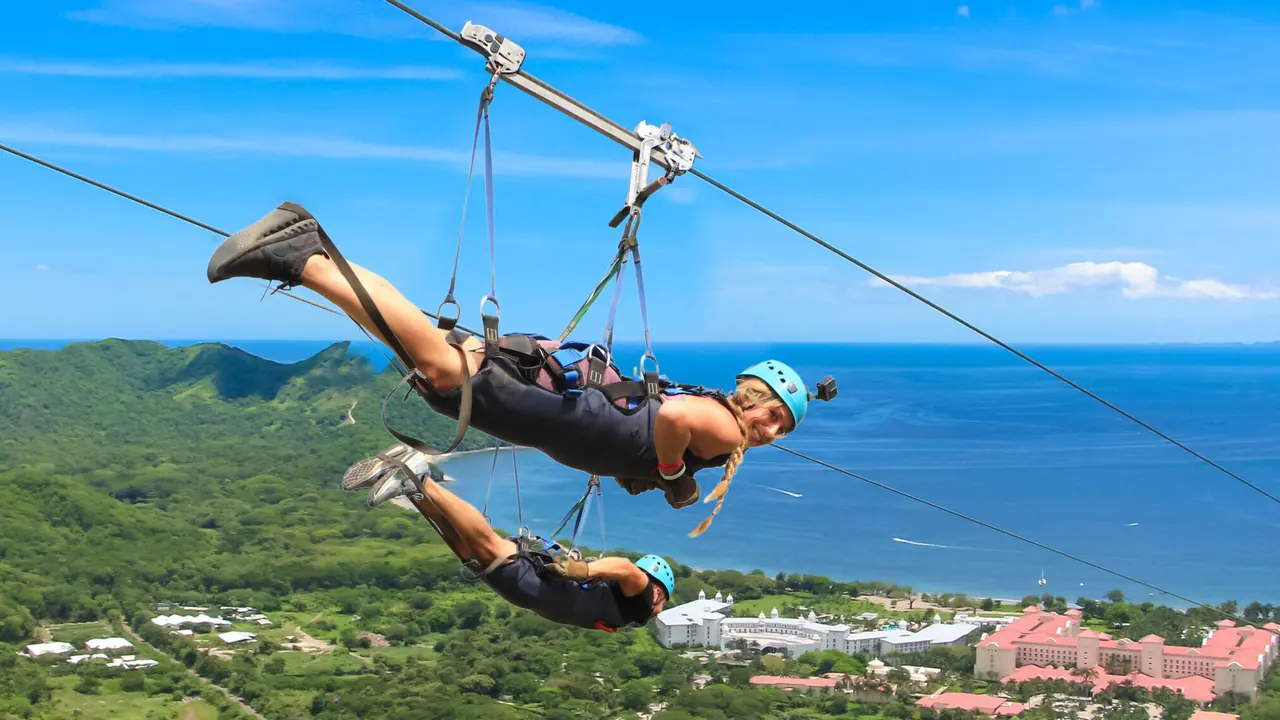
Book a pass in a couple of minutes, or call (506) 2105 5200 and our reservations team will help you choose. Open daily, 8:30 a.m. to 4:30 p.m.