
Light but mighty
The beak is made of keratin — the same material as fingernails — and filled with air pockets, so it is strong but easy to lift.
The Sanctuary · Birds
Costa Rica’s rainbow birds: three toucan species at Diamante, with beaks that look heavy and weigh almost nothing.
In the wild
Toucans are some of the most eye-catching birds in Costa Rica — curious, social, and always ready to strike a pose. At Diamante you can see three kinds: the rainbow-billed (keel-billed) toucan, the chestnut-mandibled toucan and the collared aracari.
Each has its own beak, light and hollow, painted in tropical colours. They hop between branches, croak at each other and gather in small groups to share a fruiting tree.
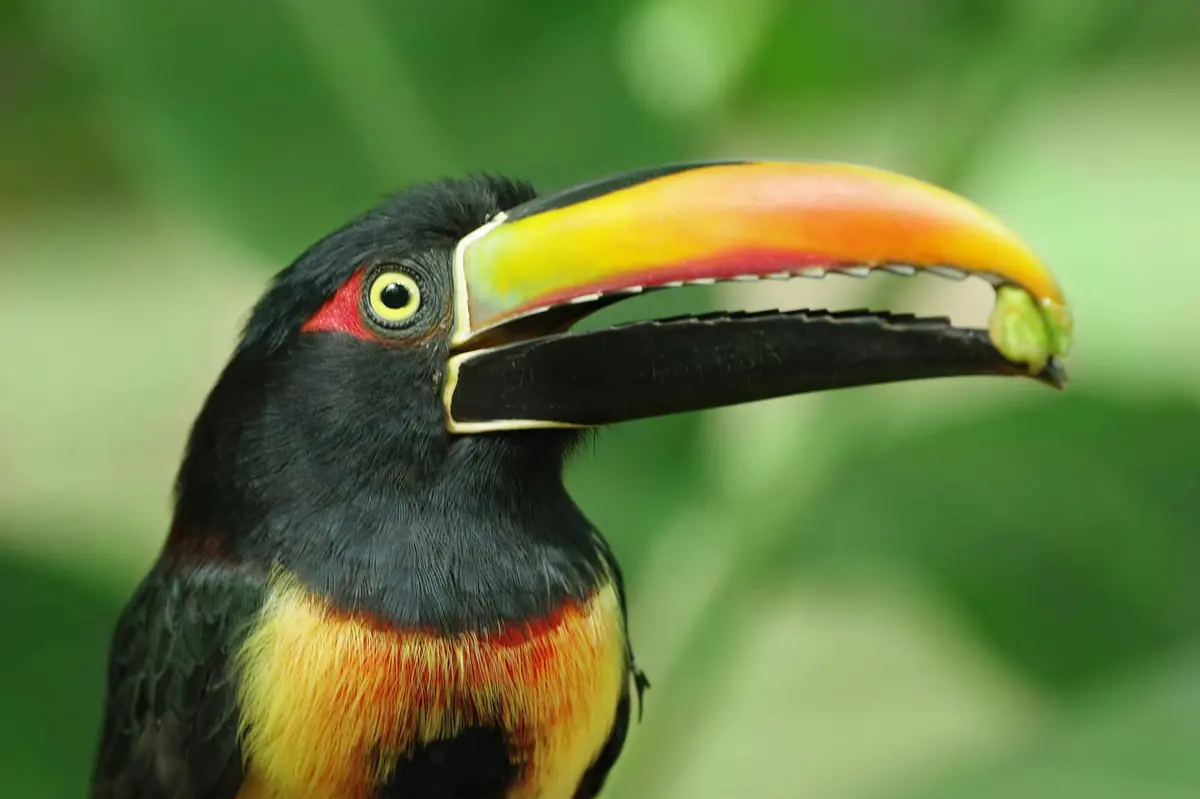
Fun facts
Biologists at Diamante share these facts with guests on every walk through the sanctuary.
The beak is made of keratin — the same material as fingernails — and filled with air pockets, so it is strong but easy to lift.
A long, narrow tongue covered in tiny spikes helps toucans grip and swallow slippery fruit.
Short legs mean toucans do not walk: they hop from branch to branch.
Instead of building nests, they move into holes carved by woodpeckers.
They do not sing — they croak, with deep frog-like calls that carry through the forest.
The female lays two to four eggs a year and both parents share incubating and feeding.
Toucans gather in small groups at fruiting trees, hopping and snacking together.
Their future depends on forest: no trees means no nest holes, no fruit and no shade.
Meet ours
These four yellow-throated toucans were confiscated by SINAC. All had been kept illegally as pets, or were being smuggled out of Costa Rica when they were intercepted.
They are now part of the national and international breeding programme for their species. Franco, our rainbow-billed toucan, is the most photographed bird in the park — and he knows it.
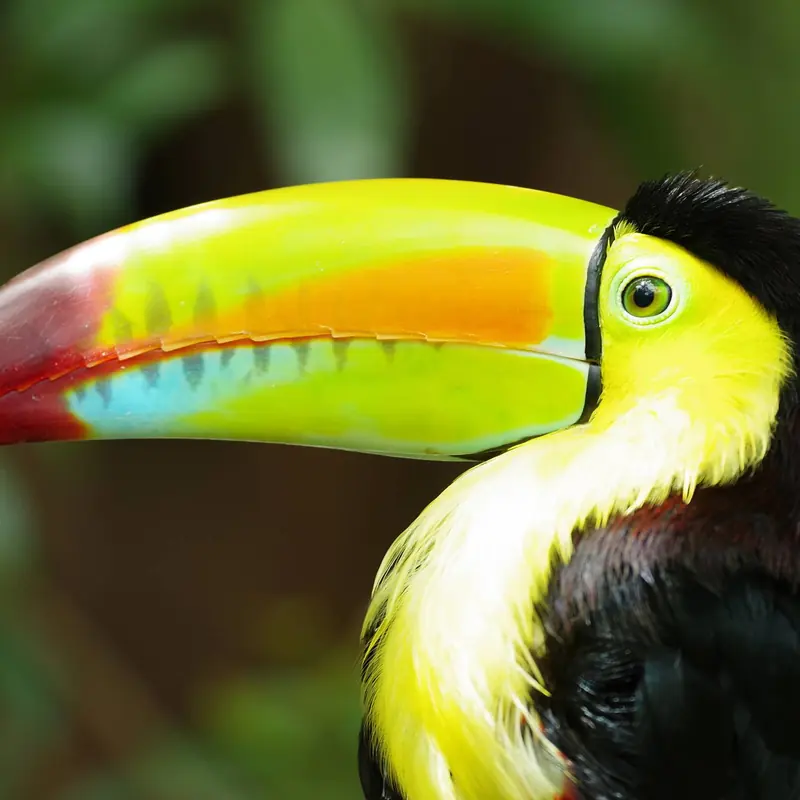
The rainbow-billed (keel-billed) toucan, the chestnut-mandibled toucan and the collared aracari, plus the yellow-throated toucans in the breeding programme.
No. Every bird has a veterinarian-approved diet and human food can make them sick. Watch, photograph and ask the biologists your questions.