
Slow and steady
Sloths move so slowly that green algae grows in their fur — natural camouflage that blends them into the leaves.
The Sanctuary · Slow living
The masters of slow living: two-toed sloths who hang, nap and smile their way through the canopy at Diamante.
In the wild
Sloths are true icons of Costa Rica’s wildlife. At Diamante you can watch them in their element — hanging effortlessly from branches, moving in slow motion, showing off the permanent smile that makes them impossible not to love.
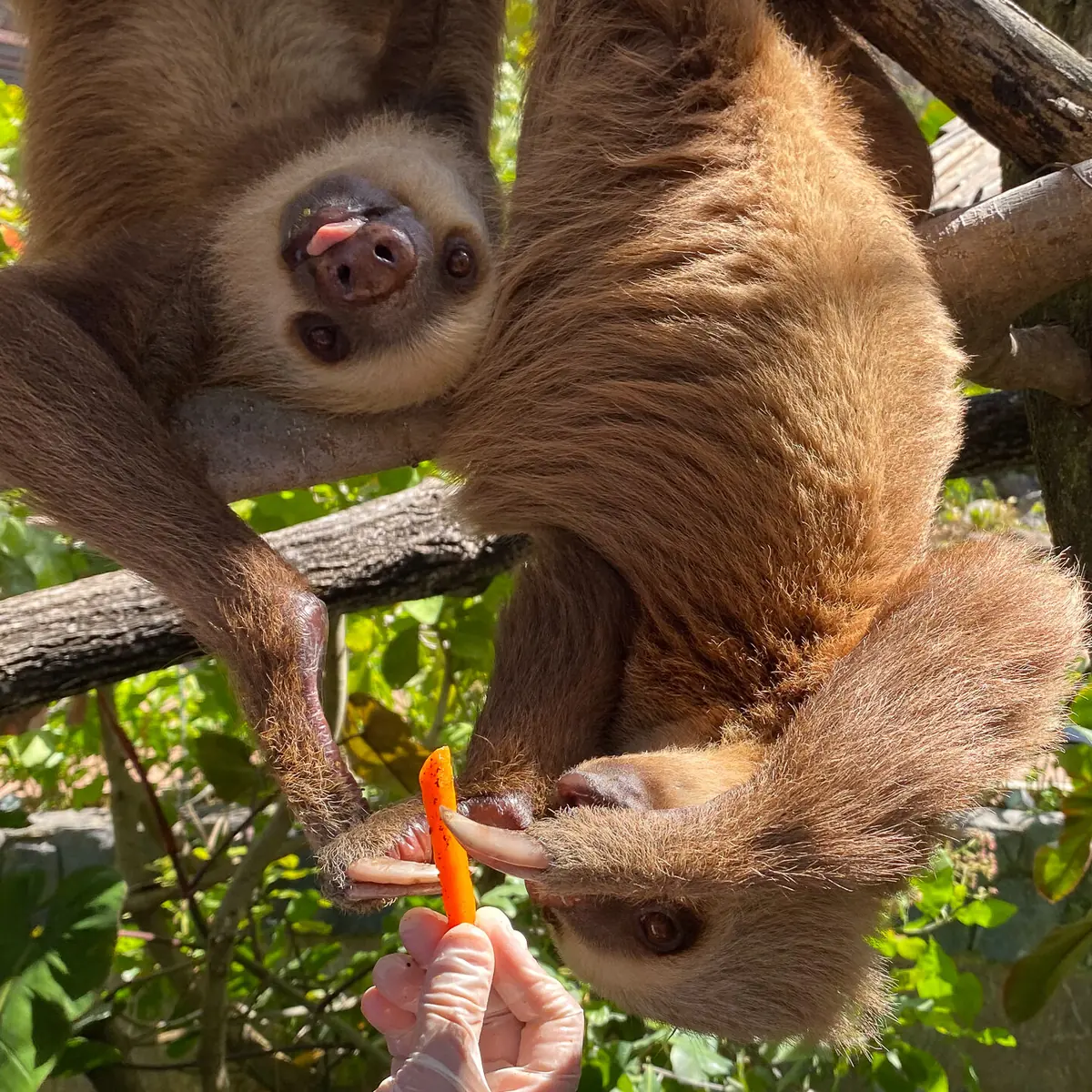
Two-toed sloths have two long, curved claws on each front paw (three-toed sloths have three). Both kinds hang by their claws rather than gripping with a hand, which is why they can sleep, eat and even give birth upside down.
Fun facts
Biologists at Diamante share these facts with guests on every walk through the sanctuary.
Sloths move so slowly that green algae grows in their fur — natural camouflage that blends them into the leaves.
They spend most of the day asleep: up to 12 hours, curled comfortably among the branches.
It can take up to 30 days for a sloth to digest a single leaf.
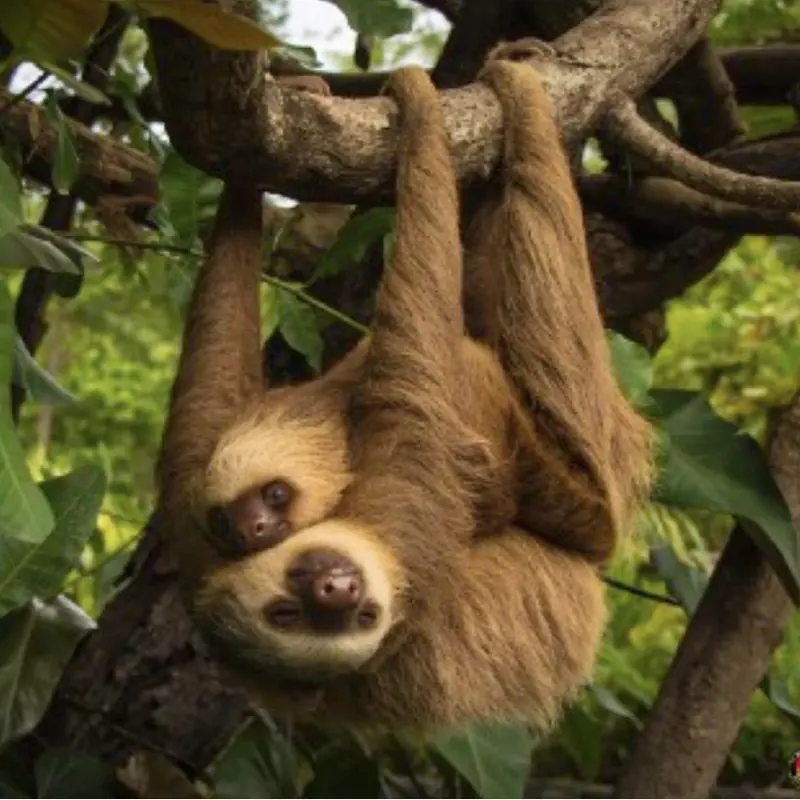
Sloths eat, sleep and even give birth while hanging from branches. For a sloth, upside down is the right way up.
Long, curved claws work like built-in hooks, so a sloth can hang all day — even while asleep.
Their diet is leaves, flowers and fruit: a rainforest salad every day.
Giant ground sloths like Megatherium grew up to 6 m (20 ft) long and weighed almost 4.5 tonnes. Today’s sloths are their smaller, sleepier descendants.
Sloths barely make a sound — just a tiny squeak or soft hiss when they need to communicate.
Meet ours
Mia and Diesel arrived from the Sloth Sanctuary in Puerto Viejo, Limón. Mia was found alone as a young animal beside a river, probably separated by heavy rain; Diesel came in as a baby in a diesel-soaked sack. Both recovered, but having grown up in care they could not be released.
Ziggy is their daughter, born at Diamante. Lucy was found as an adult on an electrical wire near houses. Authorities brought her to a rescue centre in San José, where old burn scars on her hands made release back to the same area too dangerous. She is the oldest of the four.
No. Sloths are wild animals in a sanctuary for animals that cannot return to the forest. Visitors watch from the paths, and our biologists handle all contact.
Mia, Diesel and Lucy were raised in care or injured in ways that make survival in the wild unlikely. SINAC, Costa Rica’s wildlife authority, placed them with us permanently.