
Super tails
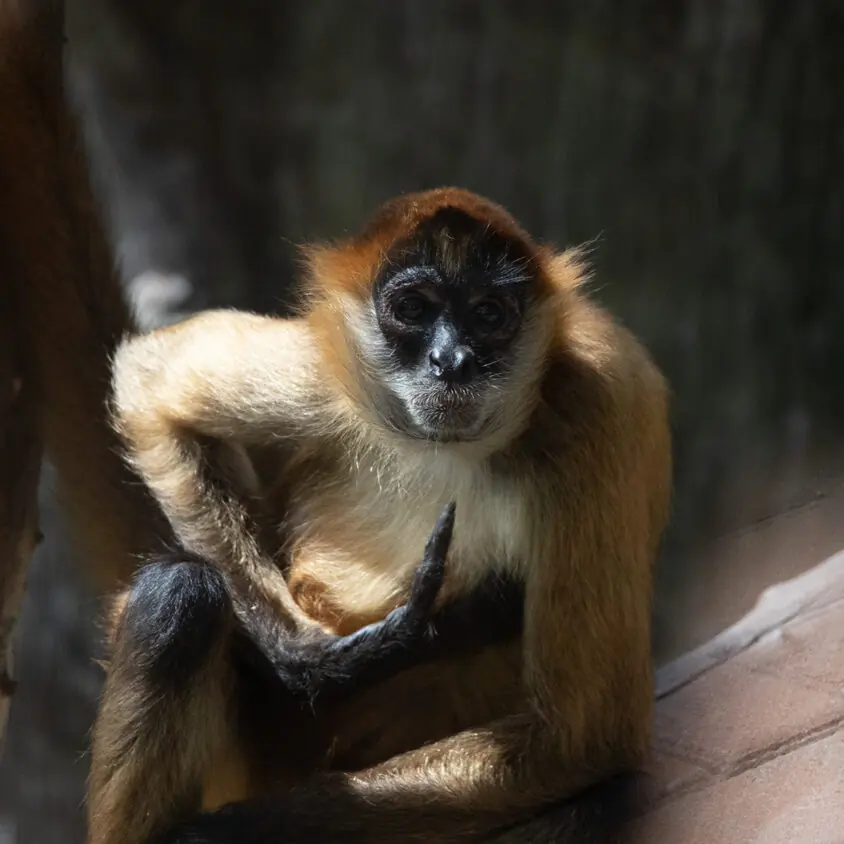
The tail works like an extra arm. The bare tip grips like a palm, so they can hang upside down.
The Sanctuary · Primates
The gymnasts of the rainforest: no thumbs, a fifth hand for a tail, and leaps of up to nine metres.
In the wild
Spider monkeys are the true gymnasts of the rainforest. Long arms, long legs and a prehensile tail let them swing through the canopy faster than you can follow, and they can leap up to nine metres in a single swing.
They live in large troops, raise their young slowly and are endangered because their forest is disappearing. At Diamante you can watch them play, rest and call to each other high in the trees.
Fun facts
Biologists at Diamante share these facts with guests on every walk through the sanctuary.
The tail works like an extra arm. The bare tip grips like a palm, so they can hang upside down.
Spider monkeys have no thumbs — only four long fingers, perfect for swinging.
A single swing can cover nine metres.
Troops can have more than 35 members, moving and feeding together.
They live high in the tallest trees, from the lowlands up into the mountains.
Fruit is their staple, and the seeds they drop help new trees grow.
Mothers carry their babies for nearly three years.
With a safe forest, spider monkeys can live up to 35 years.
Meet ours
Our spider monkeys spend their days swinging between the tall trees of their habitat, napping in the afternoons with their tails wrapped around a branch for balance.
Listen for their whoops, barks and squeals — that is how they stay in touch with each other, warn of danger and call friends over to play.
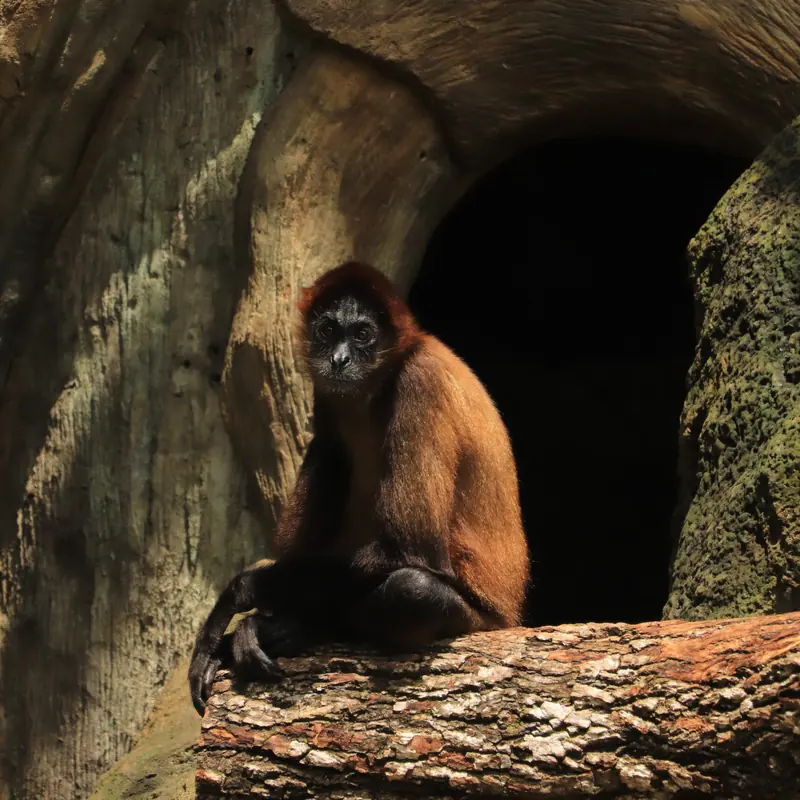
Their forest is shrinking. Protecting trees keeps them free, safe and able to move between feeding areas.
Yes. They move high in the canopy, so look up and follow the noise. Biologists on site will point them out.