
Forest gardener
Tapirs spread the seeds of the trees they eat, keeping the forest diverse.
The Sanctuary · Mammals
Costa Rica’s gentle giants: 250 kg of quiet strength, a snorkel for a nose, and babies that look like watermelons.
In the wild
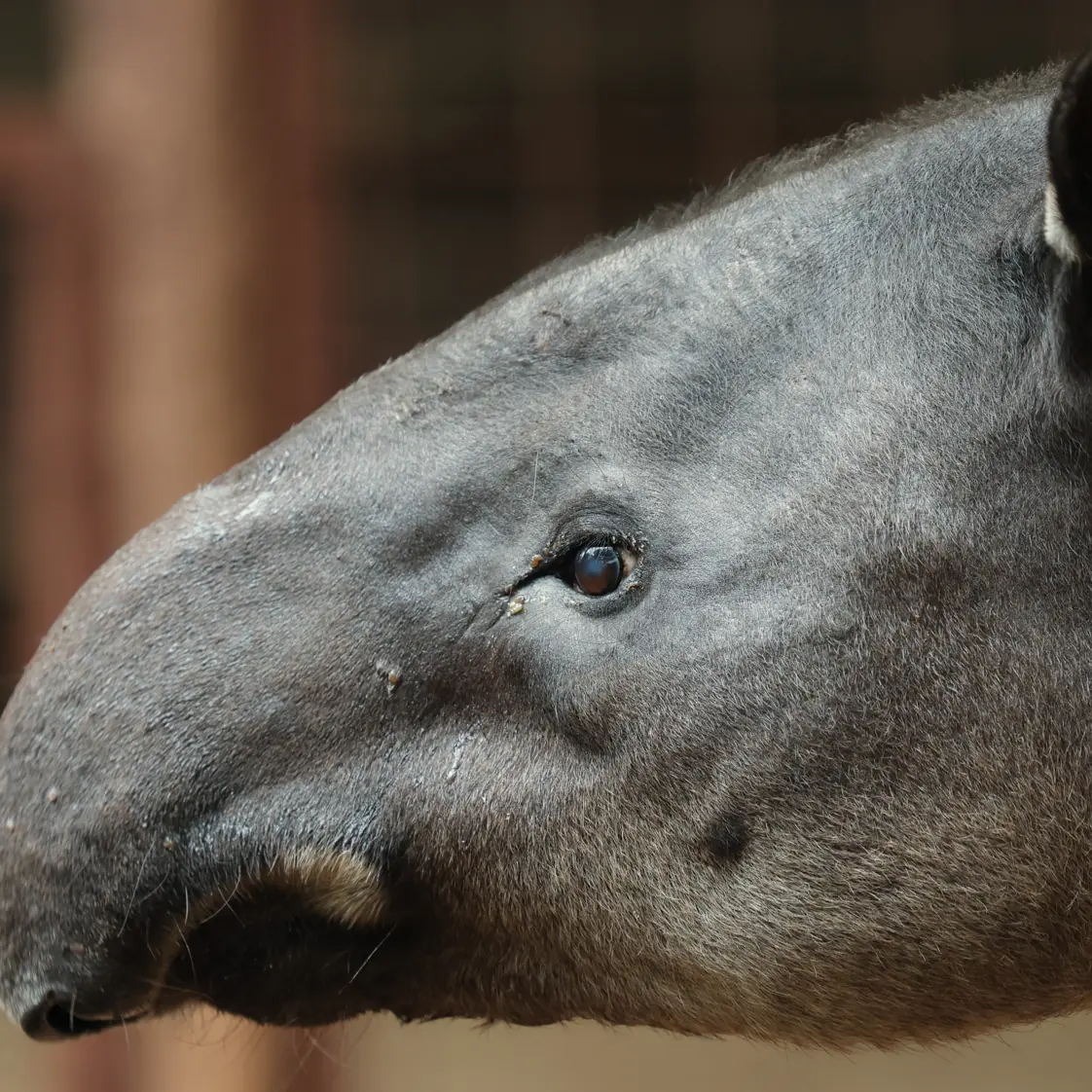
Tapirs are the largest land mammals in Central and South America. Adults can weigh up to 250 kg (550 lb), yet they are calm, plant-eating swimmers, runners and climbers.
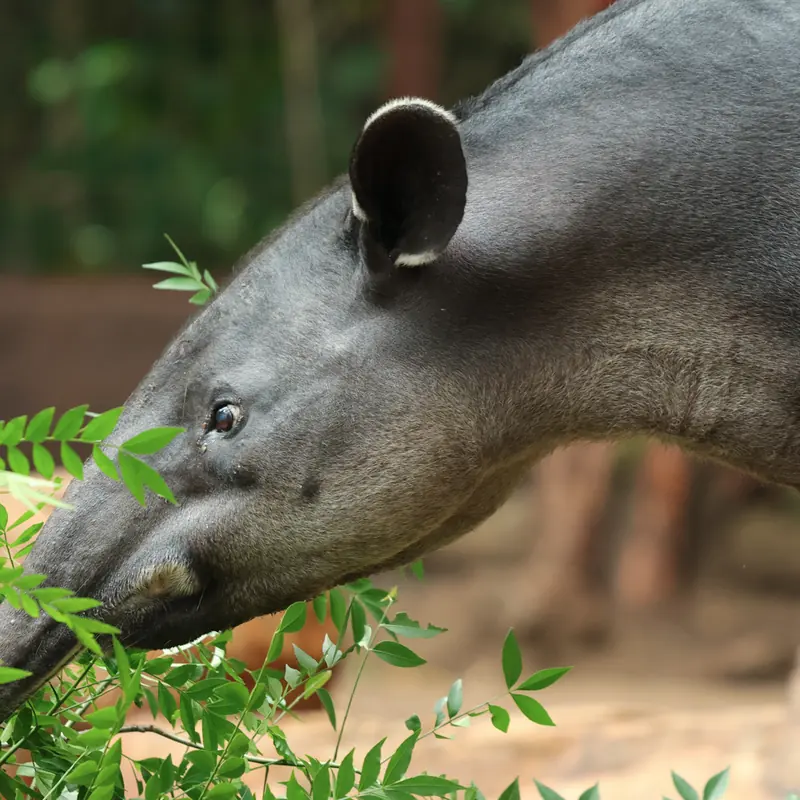
They matter far beyond their size. As they wander through the forest eating fruit and leaves, tapirs spread seeds in their droppings — which is why they are called the gardeners of the forest.
Fun facts
Biologists at Diamante share these facts with guests on every walk through the sanctuary.
Tapirs spread the seeds of the trees they eat, keeping the forest diverse.
Newborns are covered in white spots and stripes that look like a little watermelon, helping them hide in dappled light.
The flexible snout works like a snorkel when they swim.
Tapirs swim, dive and rest in rivers and lagoons to stay cool and avoid predators.
They often walk into the wind to catch the smell of fruit, water or other animals.
Large, movable ears turn to pick up sounds from every direction.
Mostly nocturnal: they rest in shade by day and explore at night.
Habitat loss and hunting make tapirs endangered. Protecting forest and rivers is the only way to keep them.
Meet ours
Baird’s tapirs are shy and mostly silent. If you are patient at the habitat you may hear soft squeaks, whistles or snorts — the sounds they use with their young.
They are most active in the evening, so the best time to see ours moving is late in the afternoon. Keep your distance, stay quiet, and let the animal decide how close it comes.
No. Tapirs are gentle plant-eaters. They can defend themselves if cornered, which is why visitors stay on the paths and never approach.
Yes. Baird’s tapirs are endangered across their range because of habitat loss and hunting.