
Band life
Females and young live in bands of up to 30, travelling and foraging together.
The Sanctuary · Mammals
Curious, social and always digging: coatis live in bands of up to thirty, with tails they use to talk.
In the wild
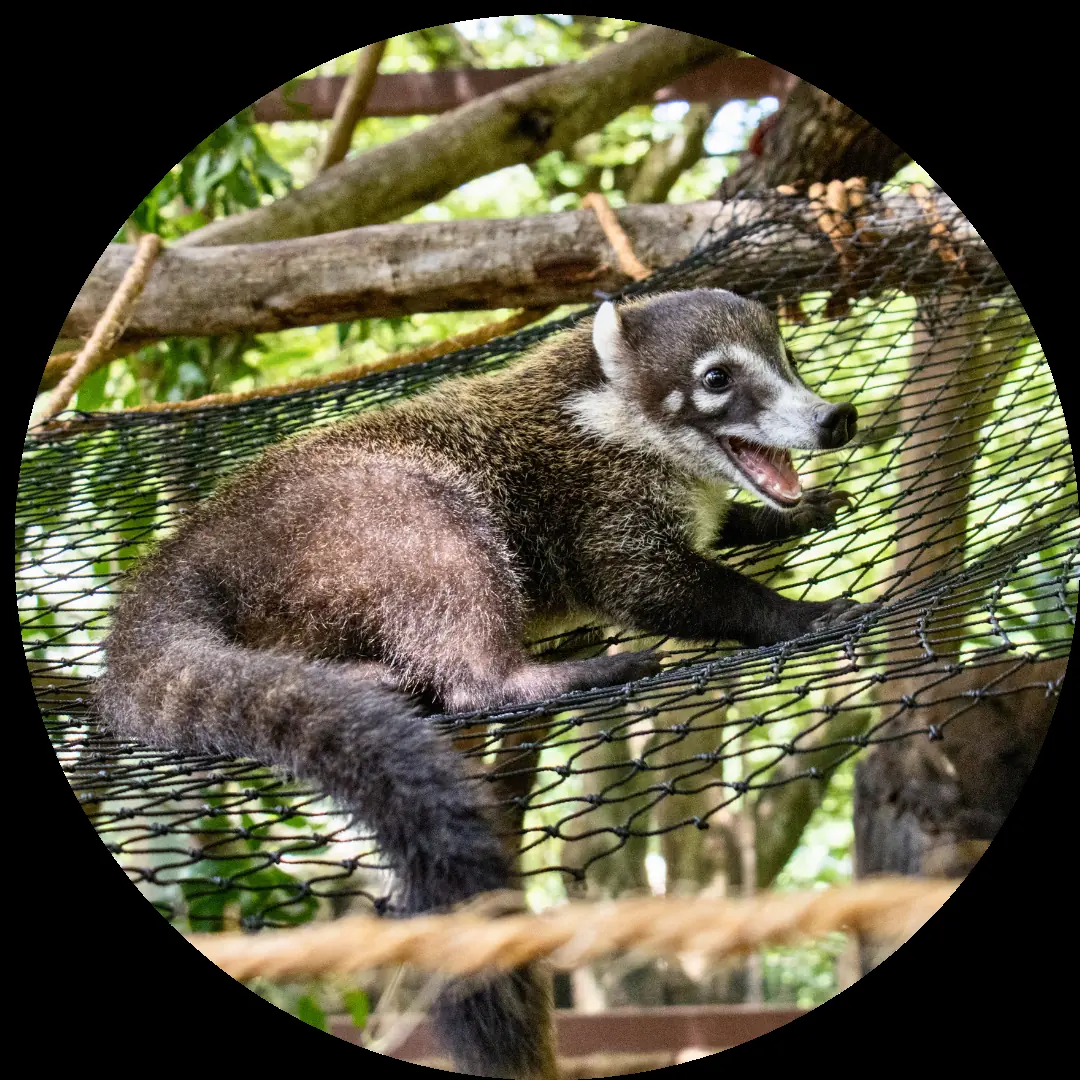
With long snouts, ringed tails and endless energy, white-nosed coatis are among the most entertaining animals to watch at Diamante. They spend the day exploring, climbing and searching for food.
They are also useful. By eating fallen fruit, insects and leftovers, coatis help keep the forest floor clean and recycle nutrients back into the soil.
Fun facts
Biologists at Diamante share these facts with guests on every walk through the sanctuary.
Females and young live in bands of up to 30, travelling and foraging together.
Adult males usually live alone, joining the band only in mating season.
Most active in the morning and late afternoon, resting at midday.
Long tails help them balance high in the trees.
Flexible snouts and sharp claws dig out insects, roots and fruit.
A coati can smell fruit and insects several metres away.
A raised striped tail signals the band to move.
They eat fallen fruit and leftovers, keeping the forest floor healthy.
Meet ours
Diamante’s coatis explore every corner of their home: digging, climbing and checking in with each other as they go.
Listen for soft grunts and squeaks. That is the band keeping in touch while it forages — the sound of one of Costa Rica’s most charming animals at work.
Yes, they are close relatives: both belong to the same family of small carnivores, and both use their dexterous front paws.
Never. Feeding wildlife changes behaviour and harms their health. The sanctuary team controls every animal’s diet.